California Golden Bears Athletics
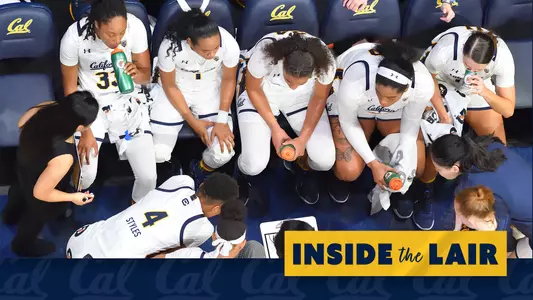
Photo by: Richard Ersted/klcfotos
Justice For All
11/24/2020 12:00 PM | Women's Basketball, Inside The Lair
Cailyn Crocker And Sierra Richey Lead The Way In Formation Of Racial Justice Council
This feature originally appeared in the 2020 Fall edition of the Cal Sports Quarterly. The Cal Athletics flagship magazine features long-form sports journalism at its finest and provides in-depth coverage of the scholar-athlete experience in Berkeley. Printed copies are mailed four times a year to Bear Backers who give annually at the Bear Club level (currently $600 or more). For more information on how you can receive a printed version of the Cal Sports Quarterly at home, send an email to CalAthleticsFund@berkeley.edu or call (510) 642-2427.
Women's basketball team meetings in the age of the COVID-19 pandemic are usually reserved for virtual film study, or team activities and games over Zoom, but by late May, head coach Charmin Smith was exhausted.
Days before, George Floyd was killed by police officers on the streets of Minneapolis. Two months earlier, Breonna Taylor was shot dead in her home as she slept, also by police officers, only a few weeks after Ahmaud Arbery was chased and killed by armed white men. These three cases encompass a small representation of the senseless murders of Black men and women in America making national news, but as the list grew, Smith and her team's exhaustion grew with it.
"I wasn't in a space, emotionally, where I mentally thought I would be very good for the team, and I imagined they may have been struggling, as well," Smith said. "So, I just told them we weren't going to talk basketball at all that day and just opened it up for them to express what they were feeling during that time."
Many of her student-athletes had already posted to social media their thoughts on systemic racism, white privilege, the Black Lives Matter movement and allyship, but Smith challenged her team with the question: "What will be our role in this moment?"
"She said, 'You guys have a platform, and you can either do nothing and that would be okay, or you can come together and do something and try to make a change within our athletic department and within the world,'" sophomore guard Cailyn Crocker explained to her fellow student-athletes over a Zoom call in August.
"For me, the world was kind of too big to think about. It was overwhelming," Crocker added. "But I felt that there are a lot of things that can be changed within our athletic department and within each of our teams, as well – just to be able to have these conversations. A lot of people, when everything was happening, didn't know where to start and didn't know how to have that conversation with one another."
Junior guard Sierra Richey, Crocker's teammate, struggled to relate but felt equally compelled to create change.
"Breonna Taylor was murdered in her home. That could have been anybody – that could have been my teammate, my coach," Richey said. "It was hard for me as their white teammate to hear how the microaggressions that they experienced on campus and in their life and in their neighborhoods just continue to happen. You want to change the world. You want to get the bad people out of the wrong places. You want to fix it on a large scale."
In a self-described "fear frenzy," Richey turned to Google and began creating a document that listed local resources for fighting racism, which she shared with Crocker. Within days of the team meeting, Smith had a five-page document from Crocker and Richey outlining a plan to create a culture of anti-racism among Cal student-athletes and within the Cal athletic department.
By June 18, an email addressed to some of the athletic department's most influential voices – Director of Athletics Jim Knowlton, Executive Senior Associate AD, Chief of Staff & Senior Woman Administrator Jenny Simon-O'Neill and Associate AD of Student-Athlete Development Dr.
Marissa Nichol – arrived from Richey and Crocker. It was less of a request, and more of a statement.
"… We are reaching out to you today as a call to action regarding the state of racial injustice that exists and thrives in the United States. We are proud of Cal Athletics' public stand of solidarity with Black communities, and a commitment to 'actions that will lead to transformative change, justice, and equality.' What we are proposing is exactly that, organized action for the purpose of perpetuating the movement that is Black Lives Matter, and ultimately shaking the foundations of racism that remain in our institution."
The email went on to list objectives, meeting logistics and expectations of Cal's athletic department in the creation of a Racial Justice Council that would "serve the purpose of protecting, educating, and advocating in the name of social justice, reform, and equality."
"I was super nervous sending that email, because me and Cai spent a really long time talking about what we even want to do, because we wanted to have it all set up to the point where they couldn't say no," Richey said.
The response they heard was a resounding yes.
Since that initial email request in mid-June, Crocker and fellow Black student-athletes created a video expressing their desires for an inclusive and anti-racist community. Cal Athletics has promoted the Racial Justice Council and its initiatives at virtual events, ranging from new student-athletes orientation to the Big C Welcome Back call. Eugene Whitlock, Cal's Assistant Vice Chancellor for People & Culture, even moderated three Racial Justice Conversations that were mandatory for each student-athlete.
"The Racial Justice conversations were created in response to the desires of both students and staff to have conversations about racial justice that involve all student-athletes so that they could not only share their experiences but also learn from each other," Whitlock said. "The participation of the student-athletes has been incredible and reflects positively on the character of those who chose to join our community. The Racial Justice Council, created by a pair of courageous students from the women's basketball team, demonstrates the leadership we support and develop in all of our student-athletes."
Whitlock added that the student-led initiative will create opportunities for students to continue to speak out and be heard on issues of racial justice as a way to make sure that the Cal Athletics administration continues these critical issues.
"We really felt that it was the time for us to unite together and really express our feelings and get a greater understanding of how we felt as Black student-athletes at Cal," Crocker told her fellow student-athletes at the inaugural Racial Justice Conversation. "If we're really going to have social justice, and really make an impact, [we need to do] that all together as one at every level."
Crocker and Richey hope to appoint two student-athletes from each team, via an application process, to form the council, and then partner with the athletic and campus community for mandatory social justice and equality training, increase voter turnout among student-athletes, and create mentor and volunteer opportunities on campus and at local elementary schools.
"We envision an organization capable of empowering athletes beyond their four years of collegiate competition, and increasing their influence beyond the fans in the stadium," Richey said. "It's not going to stop when it stops showing up in the media or you're not seeing it on your timeline. This is going to be a movement, and it's going to exist in Cal Athletics, and it's going to be an effort that everyone makes every single day to be anti-racist."
Women's basketball team meetings in the age of the COVID-19 pandemic are usually reserved for virtual film study, or team activities and games over Zoom, but by late May, head coach Charmin Smith was exhausted.
Days before, George Floyd was killed by police officers on the streets of Minneapolis. Two months earlier, Breonna Taylor was shot dead in her home as she slept, also by police officers, only a few weeks after Ahmaud Arbery was chased and killed by armed white men. These three cases encompass a small representation of the senseless murders of Black men and women in America making national news, but as the list grew, Smith and her team's exhaustion grew with it.
"I wasn't in a space, emotionally, where I mentally thought I would be very good for the team, and I imagined they may have been struggling, as well," Smith said. "So, I just told them we weren't going to talk basketball at all that day and just opened it up for them to express what they were feeling during that time."
Many of her student-athletes had already posted to social media their thoughts on systemic racism, white privilege, the Black Lives Matter movement and allyship, but Smith challenged her team with the question: "What will be our role in this moment?"
"She said, 'You guys have a platform, and you can either do nothing and that would be okay, or you can come together and do something and try to make a change within our athletic department and within the world,'" sophomore guard Cailyn Crocker explained to her fellow student-athletes over a Zoom call in August.
"For me, the world was kind of too big to think about. It was overwhelming," Crocker added. "But I felt that there are a lot of things that can be changed within our athletic department and within each of our teams, as well – just to be able to have these conversations. A lot of people, when everything was happening, didn't know where to start and didn't know how to have that conversation with one another."
Junior guard Sierra Richey, Crocker's teammate, struggled to relate but felt equally compelled to create change.
"Breonna Taylor was murdered in her home. That could have been anybody – that could have been my teammate, my coach," Richey said. "It was hard for me as their white teammate to hear how the microaggressions that they experienced on campus and in their life and in their neighborhoods just continue to happen. You want to change the world. You want to get the bad people out of the wrong places. You want to fix it on a large scale."
In a self-described "fear frenzy," Richey turned to Google and began creating a document that listed local resources for fighting racism, which she shared with Crocker. Within days of the team meeting, Smith had a five-page document from Crocker and Richey outlining a plan to create a culture of anti-racism among Cal student-athletes and within the Cal athletic department.
By June 18, an email addressed to some of the athletic department's most influential voices – Director of Athletics Jim Knowlton, Executive Senior Associate AD, Chief of Staff & Senior Woman Administrator Jenny Simon-O'Neill and Associate AD of Student-Athlete Development Dr.
Marissa Nichol – arrived from Richey and Crocker. It was less of a request, and more of a statement.
"… We are reaching out to you today as a call to action regarding the state of racial injustice that exists and thrives in the United States. We are proud of Cal Athletics' public stand of solidarity with Black communities, and a commitment to 'actions that will lead to transformative change, justice, and equality.' What we are proposing is exactly that, organized action for the purpose of perpetuating the movement that is Black Lives Matter, and ultimately shaking the foundations of racism that remain in our institution."
The email went on to list objectives, meeting logistics and expectations of Cal's athletic department in the creation of a Racial Justice Council that would "serve the purpose of protecting, educating, and advocating in the name of social justice, reform, and equality."
"I was super nervous sending that email, because me and Cai spent a really long time talking about what we even want to do, because we wanted to have it all set up to the point where they couldn't say no," Richey said.
The response they heard was a resounding yes.
Since that initial email request in mid-June, Crocker and fellow Black student-athletes created a video expressing their desires for an inclusive and anti-racist community. Cal Athletics has promoted the Racial Justice Council and its initiatives at virtual events, ranging from new student-athletes orientation to the Big C Welcome Back call. Eugene Whitlock, Cal's Assistant Vice Chancellor for People & Culture, even moderated three Racial Justice Conversations that were mandatory for each student-athlete.
"The Racial Justice conversations were created in response to the desires of both students and staff to have conversations about racial justice that involve all student-athletes so that they could not only share their experiences but also learn from each other," Whitlock said. "The participation of the student-athletes has been incredible and reflects positively on the character of those who chose to join our community. The Racial Justice Council, created by a pair of courageous students from the women's basketball team, demonstrates the leadership we support and develop in all of our student-athletes."
Whitlock added that the student-led initiative will create opportunities for students to continue to speak out and be heard on issues of racial justice as a way to make sure that the Cal Athletics administration continues these critical issues.
"We really felt that it was the time for us to unite together and really express our feelings and get a greater understanding of how we felt as Black student-athletes at Cal," Crocker told her fellow student-athletes at the inaugural Racial Justice Conversation. "If we're really going to have social justice, and really make an impact, [we need to do] that all together as one at every level."
Crocker and Richey hope to appoint two student-athletes from each team, via an application process, to form the council, and then partner with the athletic and campus community for mandatory social justice and equality training, increase voter turnout among student-athletes, and create mentor and volunteer opportunities on campus and at local elementary schools.
"We envision an organization capable of empowering athletes beyond their four years of collegiate competition, and increasing their influence beyond the fans in the stadium," Richey said. "It's not going to stop when it stops showing up in the media or you're not seeing it on your timeline. This is going to be a movement, and it's going to exist in Cal Athletics, and it's going to be an effort that everyone makes every single day to be anti-racist."


Players Mentioned

G
/ Women's Basketball
G
/ Women's BasketballMonday, August 29
Saturday, August 13
Thursday, May 08
Wednesday, April 30