California Golden Bears Athletics
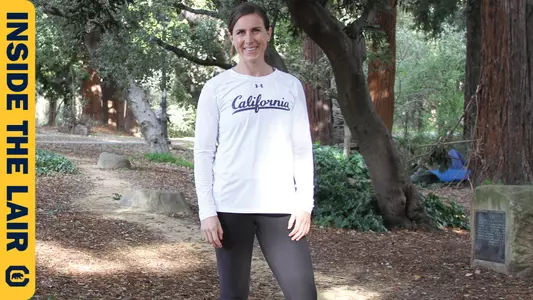
Photo by: Cal Athletics
Back In Berkeley
4/30/2020 2:32 PM | Women's Rowing, Inside The Lair
Olympic Rower Erin Cafaro Volunteers For The Bears While Pursuing Graduate Degree
This feature originally appeared in the 2020 Spring edition of the Cal Sports Quarterly. The Cal Athletics flagship magazine features long-form sports journalism at its finest and provides in-depth coverage of the scholar-athlete experience in Berkeley. Printed copies are mailed four times a year to Bear Backers who give annually at the Bear Club level (currently $600 or more). For more information on how you can receive a printed version of the Cal Sports Quarterly at home, send an email to CalAthleticsFund@berkeley.edu or call (510) 642-2427.
Erin Cafaro is best known for her two Olympic gold medals.
She also takes top honors for maximizing the human spirit.
Cafaro, a former All-American rower at Cal who went on to take gold at the 2008 and 2012 Summer Olympics, is living her best life as a PsyD student at the Wright Institute in Berkeley and a volunteer assistant coach for the Golden Bears. The highly intelligent, thoughtful and compassionate Cafaro is doing clinical research in psychological science at Wright while giving back to the sport that helped shape her into the complex, high-achieving person she is today.
"It feels good to come back and see these girls and also have a slightly different perspective on the whole thing," Cafaro said before the spring season was cancelled due to the COVID-19 pandemic. "I think there is something about a rhythm and the sound and the sweat and the tears of rowing. My formative years were dedicated to it. Once I walked back into the erg room, I felt like I was home again. It's making me fall back in love with this sport again."
Cafaro's journey since leaving Berkeley has been an impressive and compelling one. After helping Cal win back-to-back NCAA championships in 2005-06, she went on to a decorated career with the U.S. National Team. In addition to the gold medals she captured in the American eight boat, Cafaro is a five-time medalist at the World Rowing Championships and was the 2009 U.S. Rowing Female Athlete of the Year.
Cafaro went on to spend time as a private rowing and fitness coach, but she found herself becoming more and more interested in the power of the mind. She ended up working as a research coordinator at the Huberman Lab at Stanford, focusing on the study of fear, anxiety and therapeutic interventions.
She finally decided she needed to go back to school to satisfy her intellectual appetite and enrolled at the Wright Institute, which seeks to educate aspiring clinical psychologists with a broad body of scientific studies. Cafaro is in the first year of a five-year program and is seeing clients in an addiction recovery clinic.
"Psychology is hard," Cafaro said. "It's scary. It's still stigmatized. It's a really difficult and challenging area to be in, and it's probably one of the most important places that a lot of us can become healthier."
Cafaro initially applied to three other programs. When she didn't hear from the Wright Institute for a while, she decided to pay the school a visit in person.
"We weren't sure at first if she was a great fit for us," said John Pitts, Wright's Director of Admissions and Student Services. "She called and asked to come see me. From talking to her, she is so impressive in person. There was no defensiveness about our concerns that she wasn't necessarily a good fit for us. But she illustrated the qualities of an Olympic athlete. She wasn't going to let anything stand in her way.
"She wasn't pushy about it – just determined. I thought, how can we not give this person a chance to come in and at least interview? And she did great."
Meanwhile, around the corner in the erg room at Edwards Stadium, Cafaro made an impact on the Cal women's rowing team during the shortened 2019-20 season. She attended practice twice a week, lending the type of perspective that only one of the top rowers in American history can.
"When I was here, I was just starting out in the sport," Cafaro said. "I was throwing all the eggs at the wall. I think that's what a lot of athletes do – they are just trying to do everything. Hopefully, the insight that I have, not only from training but from the clinical psychology side of it, I can transfer some of that to them so they only have to throw half the eggs against the wall."
At 5-foot-8, Cafaro didn't necessarily have the build of a top-level rower when she began to compete for former head coach Dave O'Neill in 2002. But it soon became obvious that her relentless focus, drive and determination would make up for any physical shortcomings she may possess.
"Erin was the first one I noticed when I came to Cal," said former Cal teammate Iva Obradovic, a 2008 Olympian who remains close to Cafaro. "She didn't really have a common rower's body, but she was always running with the top group. My first thought was, I want to be friends with this girl. She always had a game face on."
A friendship was indeed born, so much so that it was Cafaro who provided the encouragement Obradovic needed to return to the United States from Serbia after they both left Cal.
"I always wanted to move back here and live in the U.S," said Obradovic, now an assistant coach at UCLA. "I didn't really have the strength to make the actual step. I had just finished my rowing career and didn't know what to do next. Erin basically told me, 'What are you waiting for? Why are you just sitting there and being sad. You know what to do.' I bought a plane ticket the next day, and she picked me up from the airport. I ended up living with her for three months until I found a job. I'm grateful to this day for everything she did for me."
It was O'Neill who encouraged Cafaro to make a run at the national team during the summer before her senior year at Cal. He said it took a couple years for Cafaro to come into her own, but it was her resilience, grit and ability to learn that turned her into a top athlete.
"She has a sense of her whole holistic self in terms of mind-body connection," said O'Neill, now the head coach at the University of Texas. "Getting her doctorate in the psychology field is perfect for her. She has a lot to offer everyone in terms of the power of the human spirit."
Remy Hitomi was a freshman with Cafaro when they started rowing together for the Bears in 2002, and she had a similar reaction as Obradovic. She didn't see Cafaro as your typical rower – but her intangible traits were atypical, as well.
"Sometimes, others might have a few inches on her, but with that drive and relentless determination, she was able to see how each element of her training and her lifestyle would contribute to her improvement on the water," Hitomi said. "She had a unique ability to apply constructive criticism. She just wanted to get better and faster. If you told her what she needed to do, she would do it and then 10 times more than that. That's just how she is wired."
That wiring now has her on track to make a major impact – not just on the water but on the human endeavor. Her expertise and knowledge is making a difference in Cal's erg room, but her impact figures to cast a much larger net.
"She has the ability to touch people," Obradovic said. "People are mesmerized by what she says. She's found the right path. I know she will be very successful and will help and influence a lot of people."
Erin Cafaro is best known for her two Olympic gold medals.
She also takes top honors for maximizing the human spirit.
Cafaro, a former All-American rower at Cal who went on to take gold at the 2008 and 2012 Summer Olympics, is living her best life as a PsyD student at the Wright Institute in Berkeley and a volunteer assistant coach for the Golden Bears. The highly intelligent, thoughtful and compassionate Cafaro is doing clinical research in psychological science at Wright while giving back to the sport that helped shape her into the complex, high-achieving person she is today.
"It feels good to come back and see these girls and also have a slightly different perspective on the whole thing," Cafaro said before the spring season was cancelled due to the COVID-19 pandemic. "I think there is something about a rhythm and the sound and the sweat and the tears of rowing. My formative years were dedicated to it. Once I walked back into the erg room, I felt like I was home again. It's making me fall back in love with this sport again."
Cafaro's journey since leaving Berkeley has been an impressive and compelling one. After helping Cal win back-to-back NCAA championships in 2005-06, she went on to a decorated career with the U.S. National Team. In addition to the gold medals she captured in the American eight boat, Cafaro is a five-time medalist at the World Rowing Championships and was the 2009 U.S. Rowing Female Athlete of the Year.
Cafaro went on to spend time as a private rowing and fitness coach, but she found herself becoming more and more interested in the power of the mind. She ended up working as a research coordinator at the Huberman Lab at Stanford, focusing on the study of fear, anxiety and therapeutic interventions.
She finally decided she needed to go back to school to satisfy her intellectual appetite and enrolled at the Wright Institute, which seeks to educate aspiring clinical psychologists with a broad body of scientific studies. Cafaro is in the first year of a five-year program and is seeing clients in an addiction recovery clinic.
"Psychology is hard," Cafaro said. "It's scary. It's still stigmatized. It's a really difficult and challenging area to be in, and it's probably one of the most important places that a lot of us can become healthier."
Cafaro initially applied to three other programs. When she didn't hear from the Wright Institute for a while, she decided to pay the school a visit in person.
"We weren't sure at first if she was a great fit for us," said John Pitts, Wright's Director of Admissions and Student Services. "She called and asked to come see me. From talking to her, she is so impressive in person. There was no defensiveness about our concerns that she wasn't necessarily a good fit for us. But she illustrated the qualities of an Olympic athlete. She wasn't going to let anything stand in her way.
"She wasn't pushy about it – just determined. I thought, how can we not give this person a chance to come in and at least interview? And she did great."
Meanwhile, around the corner in the erg room at Edwards Stadium, Cafaro made an impact on the Cal women's rowing team during the shortened 2019-20 season. She attended practice twice a week, lending the type of perspective that only one of the top rowers in American history can.
"When I was here, I was just starting out in the sport," Cafaro said. "I was throwing all the eggs at the wall. I think that's what a lot of athletes do – they are just trying to do everything. Hopefully, the insight that I have, not only from training but from the clinical psychology side of it, I can transfer some of that to them so they only have to throw half the eggs against the wall."
At 5-foot-8, Cafaro didn't necessarily have the build of a top-level rower when she began to compete for former head coach Dave O'Neill in 2002. But it soon became obvious that her relentless focus, drive and determination would make up for any physical shortcomings she may possess.
"Erin was the first one I noticed when I came to Cal," said former Cal teammate Iva Obradovic, a 2008 Olympian who remains close to Cafaro. "She didn't really have a common rower's body, but she was always running with the top group. My first thought was, I want to be friends with this girl. She always had a game face on."
A friendship was indeed born, so much so that it was Cafaro who provided the encouragement Obradovic needed to return to the United States from Serbia after they both left Cal.
"I always wanted to move back here and live in the U.S," said Obradovic, now an assistant coach at UCLA. "I didn't really have the strength to make the actual step. I had just finished my rowing career and didn't know what to do next. Erin basically told me, 'What are you waiting for? Why are you just sitting there and being sad. You know what to do.' I bought a plane ticket the next day, and she picked me up from the airport. I ended up living with her for three months until I found a job. I'm grateful to this day for everything she did for me."
It was O'Neill who encouraged Cafaro to make a run at the national team during the summer before her senior year at Cal. He said it took a couple years for Cafaro to come into her own, but it was her resilience, grit and ability to learn that turned her into a top athlete.
"She has a sense of her whole holistic self in terms of mind-body connection," said O'Neill, now the head coach at the University of Texas. "Getting her doctorate in the psychology field is perfect for her. She has a lot to offer everyone in terms of the power of the human spirit."
Remy Hitomi was a freshman with Cafaro when they started rowing together for the Bears in 2002, and she had a similar reaction as Obradovic. She didn't see Cafaro as your typical rower – but her intangible traits were atypical, as well.
"Sometimes, others might have a few inches on her, but with that drive and relentless determination, she was able to see how each element of her training and her lifestyle would contribute to her improvement on the water," Hitomi said. "She had a unique ability to apply constructive criticism. She just wanted to get better and faster. If you told her what she needed to do, she would do it and then 10 times more than that. That's just how she is wired."
That wiring now has her on track to make a major impact – not just on the water but on the human endeavor. Her expertise and knowledge is making a difference in Cal's erg room, but her impact figures to cast a much larger net.
"She has the ability to touch people," Obradovic said. "People are mesmerized by what she says. She's found the right path. I know she will be very successful and will help and influence a lot of people."


Monday, August 29
Saturday, August 13
Thursday, May 08
Wednesday, April 30