California Golden Bears Athletics

Photo by: Cal Athletics
Golden Bear Trailblazer
8/26/2020 12:20 PM | Cal Athletics Fund
Cal Receives Bequest Commitment From Former Women’s AD Lue Lilly
This feature originally appeared in the Summer edition of the Cal Sports Quarterly. The Cal Athletics flagship magazine features long-form sports journalism at its finest and provides in-depth coverage of the scholar-athlete experience in Berkeley. Printed copies are mailed four times a year to Bear Backers who give annually at the Bear Club level (currently $600 or more). For more information on how you can receive a printed version of the Cal Sports Quarterly at home, send an email to CalAthleticsFund@berkeley.edu or call (510) 642-2427.
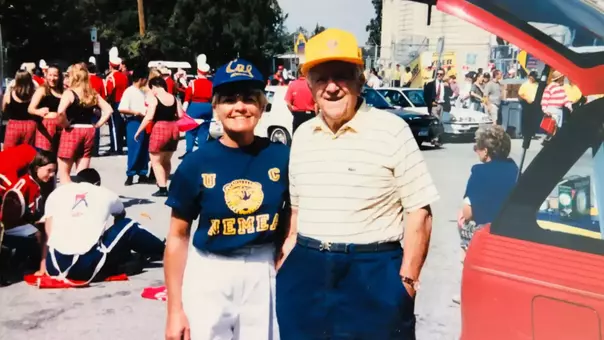
Considered a pioneer in the advancement of female student-athletes, Lue Lilly arrived at UC Berkeley in 1976 with a vision for improving the status of women in athletics.
Over 40 years later, Lilly – Cal's first and only women's athletic director – remains committed to that vision.
Through a $1,275,000 legacy commitment given by Lilly to Cal this spring, a new scholarship will be created and two others will be enhanced:
The scholarship will recognize one female student-athlete annually who has performed in an outstanding manner in both the classroom and in her sport. A committee will select a deserving recipient from among the three female student-athletes with the highest grade-point averages at the end of their sophomore years. Lilly was an accomplished athlete herself, who attended Lewis & Clark College and set an American record in swimming. Lilly, who competed before Title IX and the advent of athletic aid for women, recalled that her junior year of college was the most challenging to balance, especially academically and financially.
"The idea of awarding the scholarships to rising juniors came from my personal experiences in school," Lilly said. "No one in my family had attended college before me, and I had to navigate a path of unknowns. After you've made it through two years of college, that junior year can present a slew of new challenges, and I wanted to help those scholarship recipients get through that specifically difficult year."
As the valedictorian of her high school graduating class, Lilly received multiple academic scholarships for her freshman year and had one for her sophomore year after remaining in good academic standing. Lilly did not receive a scholarship for her junior year, however, which forced her to settle into a new routine of balancing academics, athletics and the financial requirements to make up for her remaining tuition.
"Those experiences later played a role in why I put such an emphasis on blending academics and athletics at the highest level when I came to Cal as an AD," said Lilly, who has been inducted into three Halls of Fame, including the Cal Athletic Hall of Fame in 2005, and is a recipient of the Lifetime Achievement Award by the National Association of Collegiate Women's Athletic Administrators. "It was important to my mother for me to have a well-rounded college experience, and I carried that with me throughout my career."
Lilly served as the Bears' women's athletic director from 1976-92, a 17-year span in which the Cal women won 28 conference titles in eight of 11 sports, plus a national team title in rowing in 1980. Building off the enactment of Title IX in 1972 and the formation of a women's athletic department at Cal in the mid-1970s, Lilly fought for the ability to start 13 scholarships with the help of Joan Parker, a former three-sport athlete, coach and administrator at Cal.
"Most of those original scholarships had a lot of academic thrust to them," Lilly said. "Reflecting again on my personal experiences in school, these scholarships are important to me knowing that I couldn't have attended college without a scholarship in place."
The impact of those scholarships were evident from the start; the first two female student-athletes Cal brought in on scholarship were Sheryl Johnson and Colleen Galloway, who remain two of the greatest female athletes to play in Berkeley. Johnson became a three-time Olympian in field hockey, while Galloway set the all-time school scoring record in basketball that stood until Kristine Anigwe broke it in 2019.
In addition to scholarships, Lilly worked tirelessly to solidify proper treatment, locker room access, equipment, travel budgets, facilities and more for the women's programs at Cal.
"Lue Lilly's leadership remains as important today as it was when she began at Cal nearly 45 years ago," Director of Athletics Jim Knowlton said. "We are excited and thankful to receive such a generous gift that will empower our incredible female student-athletes for years to come."
The Donna Terry Softball Endowment Fund is named after the former Cal head coach who amassed 165 wins in five seasons (1983-87) and led the Bears to their first NCAA Tournament appearance in 1986 before passing away from health complications in 1988. Her then-assistant coach, Diane Ninemire, became interim head coach in 1988 after Terry took a medical leave of absence and continued long term, going on to win 1,355 games and the 2002 Women's College World Series, the first NCAA title of any women's team at Cal.
"At that time, Donna's softball program was one of the best – probably the best – we had in team sports," Lilly recalled. "Her death at that young of an age was so unfortunate and setting up a scholarship in her name is to honor what she did for Cal's softball program."
Still a fixture at Cal athletic events – including the 150W campaign kickoff in January that celebrates 150 years since women were admitted to the University - Lilly believes the greatest reward of being a student-athlete, particularly at Cal, is the self-esteem that can build along the way.
"All the great things that are said about college athletics, I believe in them," Lilly said. "How you're treated as a student-athlete can make a life's worth of a difference. Whether it's the dynamics of a healthy coach-player relationship or the standards you're held to athletically and academically, it all pays off in the long run when it's handled the right way.
"What's nice about Cal is there are no exceptions to slip by without good grades. There's a demand from the athletic department to have academics stressed as much as anything. Athletes will get a bad rap sometimes, but not at Cal … it's up to the administrators to have their student-athletes earn legitimate degrees. I'm certainly proud of being able to provide opportunities for young, skilled women to earn a great academic background."
Considered a pioneer in the advancement of female student-athletes, Lue Lilly arrived at UC Berkeley in 1976 with a vision for improving the status of women in athletics.
Over 40 years later, Lilly – Cal's first and only women's athletic director – remains committed to that vision.
Through a $1,275,000 legacy commitment given by Lilly to Cal this spring, a new scholarship will be created and two others will be enhanced:
- $1 million to create the Dr. Luella J. Lilly Academic-Athletic Excellence Award Endowment Fund
- $250,000 to support the Dr. Luella J. Lilly Softball Endowment Fund
- $25,000 to the Donna Terry Softball Endowment Fund
The scholarship will recognize one female student-athlete annually who has performed in an outstanding manner in both the classroom and in her sport. A committee will select a deserving recipient from among the three female student-athletes with the highest grade-point averages at the end of their sophomore years. Lilly was an accomplished athlete herself, who attended Lewis & Clark College and set an American record in swimming. Lilly, who competed before Title IX and the advent of athletic aid for women, recalled that her junior year of college was the most challenging to balance, especially academically and financially.
"The idea of awarding the scholarships to rising juniors came from my personal experiences in school," Lilly said. "No one in my family had attended college before me, and I had to navigate a path of unknowns. After you've made it through two years of college, that junior year can present a slew of new challenges, and I wanted to help those scholarship recipients get through that specifically difficult year."
As the valedictorian of her high school graduating class, Lilly received multiple academic scholarships for her freshman year and had one for her sophomore year after remaining in good academic standing. Lilly did not receive a scholarship for her junior year, however, which forced her to settle into a new routine of balancing academics, athletics and the financial requirements to make up for her remaining tuition.
"Those experiences later played a role in why I put such an emphasis on blending academics and athletics at the highest level when I came to Cal as an AD," said Lilly, who has been inducted into three Halls of Fame, including the Cal Athletic Hall of Fame in 2005, and is a recipient of the Lifetime Achievement Award by the National Association of Collegiate Women's Athletic Administrators. "It was important to my mother for me to have a well-rounded college experience, and I carried that with me throughout my career."
Lilly served as the Bears' women's athletic director from 1976-92, a 17-year span in which the Cal women won 28 conference titles in eight of 11 sports, plus a national team title in rowing in 1980. Building off the enactment of Title IX in 1972 and the formation of a women's athletic department at Cal in the mid-1970s, Lilly fought for the ability to start 13 scholarships with the help of Joan Parker, a former three-sport athlete, coach and administrator at Cal.
"Most of those original scholarships had a lot of academic thrust to them," Lilly said. "Reflecting again on my personal experiences in school, these scholarships are important to me knowing that I couldn't have attended college without a scholarship in place."
The impact of those scholarships were evident from the start; the first two female student-athletes Cal brought in on scholarship were Sheryl Johnson and Colleen Galloway, who remain two of the greatest female athletes to play in Berkeley. Johnson became a three-time Olympian in field hockey, while Galloway set the all-time school scoring record in basketball that stood until Kristine Anigwe broke it in 2019.
In addition to scholarships, Lilly worked tirelessly to solidify proper treatment, locker room access, equipment, travel budgets, facilities and more for the women's programs at Cal.
"Lue Lilly's leadership remains as important today as it was when she began at Cal nearly 45 years ago," Director of Athletics Jim Knowlton said. "We are excited and thankful to receive such a generous gift that will empower our incredible female student-athletes for years to come."
The Donna Terry Softball Endowment Fund is named after the former Cal head coach who amassed 165 wins in five seasons (1983-87) and led the Bears to their first NCAA Tournament appearance in 1986 before passing away from health complications in 1988. Her then-assistant coach, Diane Ninemire, became interim head coach in 1988 after Terry took a medical leave of absence and continued long term, going on to win 1,355 games and the 2002 Women's College World Series, the first NCAA title of any women's team at Cal.
"At that time, Donna's softball program was one of the best – probably the best – we had in team sports," Lilly recalled. "Her death at that young of an age was so unfortunate and setting up a scholarship in her name is to honor what she did for Cal's softball program."
Still a fixture at Cal athletic events – including the 150W campaign kickoff in January that celebrates 150 years since women were admitted to the University - Lilly believes the greatest reward of being a student-athlete, particularly at Cal, is the self-esteem that can build along the way.
"All the great things that are said about college athletics, I believe in them," Lilly said. "How you're treated as a student-athlete can make a life's worth of a difference. Whether it's the dynamics of a healthy coach-player relationship or the standards you're held to athletically and academically, it all pays off in the long run when it's handled the right way.
"What's nice about Cal is there are no exceptions to slip by without good grades. There's a demand from the athletic department to have academics stressed as much as anything. Athletes will get a bad rap sometimes, but not at Cal … it's up to the administrators to have their student-athletes earn legitimate degrees. I'm certainly proud of being able to provide opportunities for young, skilled women to earn a great academic background."
Tuesday, September 01
Monday, August 31
Saturday, August 29
Friday, August 28