California Golden Bears Athletics
The Pillars: Community Engagement
2/26/2021 10:00 AM | Inside The Lair, Cameron Institute
Student-Athletes Focus On Improving Community And Themselves
Editor's Note: This is the fourth and final installment in a series examining each of the pillars of the Cameron Institute.
Today: Community Engagement
Feb. 5: Career Development
Feb. 12: Leadership & Personal Development
Feb. 18: High Performance & Well-Being
As the Cameron Institute builds out programming for its community engagement pillar, one teaching is becoming increasingly clear.
When student-athletes improve their community, they also improve themselves.
That's one of the primary lessons of the community engagement pillar. While Cal's student-athletes look to provide service to their community by joining engagement groups within Cal Athletics or reaching out off campus, they will become enlightened by the impact they can make, partly because of their platform as Division I athletes.
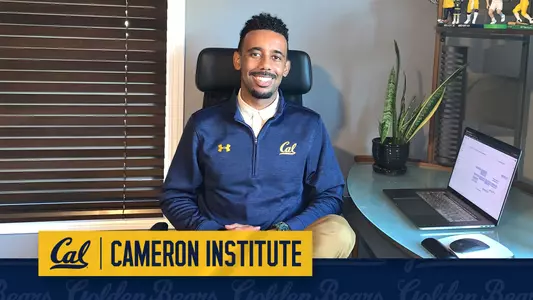
"The structures that we are putting in place from a community engagement standpoint aren't just to check a box," Cameron Institute interim Director of Operations Bobby Thompson said. "We're not looking to just do whatever task it is in our communities. We will also invoke dialogue and self-reflection and doing those things in ways to enhance and amplify the bilateral nature of that exchange of service."
Thompson and the Cameron Institute recognize what can often be a common reaction to community service – that providing that service can benefit the provider just as much – and sometimes more – than the receiver of that service. The impact on the provider can be profound in terms of reflection, gratefulness and self-improvement.
 "Reflection is an important aspect of service," Thompson said. "You can do whatever community service or impact project you like, and the work you have done is good for that other individual. But the learning from that experience is symbiotic. It's a two-way street. While you may be providing value for somebody else from a tangible standpoint, when you reflect on it and the privileges that you have to be able to be of service in that capacity – that's when we all truly grow in our personal development, our professional development, our cultural and societal competence, and so on and so forth."
The Cameron Institute is in the process of developing a services opportunities portal – a one-stop digital shop where Cal student-athletes can find community service opportunities as well as maintain profiles to find the best match for engagement. There are eight student-athlete engagement groups in Cal Athletics that are based on such commonalities as identity, academic and professional interests, and social issues.
"We are working on creating a more formal structure so everyone is aware of the engagement groups that are available to students," Cameron Institute Director Dr. Marissa Nichols said. "A lot of the community engagement efforts will move through these student-led groups. Bringing those engagement groups together to ensure we are all aligned and supporting each other's efforts, and there's an awareness of the collaboration and partnership opportunities – certainly, that's something we are looking at."
To that end, the Cameron Institute has also created the "Unified Coalition of Bears," an effort to bring together the executive leaders of each Cal Athletics engagement group to share ideas, discuss challenges and collaborate where possible to be as proficient and productive as possible.
"Community engagement is important to all of them," Thompson said. "It's bringing the decision-making leaders to the table to understand where they all stand in this holistic pie of how we are trying to reach student-athletes in a number of ways."
The community engagement pillar falls in line with Cal Athletics' strategic plan and the campus' overall mission of community service. The Cameron Institute wants student-athletes to not only be engaged through internal engagement groups, but to reach out across campus and beyond.
"Building unique partnerships and collaborative opportunities across campus and in the community is certainly a priority at UC Berkeley," Nichols said. "It makes sense that we have a formal structure and system to ensure that students are positioned with meaningful and transformational opportunities. We also look forward to identifying common interests among our 30 teams, and creating alignment opportunities to further a sense of belonging and community.
Community engagement will not only enhance Cal student-athletes' personal enrichment, but can serve a pragmatic purpose as well. As student-athletes participate in the process, it may give them information that leads to declaring a major or applying for an internship or permanent job after graduation.
"Some people from their engagement will realize they have some professional interest," Thompson said. "It may make them realize they want to get into a nonprofit sector or community leadership. They are engaging in their community, and by doing that they are also enriching and enhancing their professional development and leadership development."