California Golden Bears Athletics
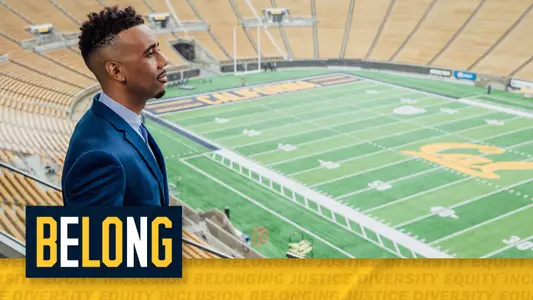
Photo by: Cal Athletics
The Thin Line Of Access
2/14/2022 11:38 AM | DEIBJ
Think about a time when you were denied access to something.
Perhaps you weren't able to make a reservation at your favorite restaurant because every table was booked … or you weren't able to see your favorite artist perform live because the show was sold out … or you weren't able to use the restroom at the front of an airplane because it was reserved for passengers who paid for first class. Let's take it a step further – maybe you or someone you know has been denied access to healthcare due to the type of one's medical coverage. Do you know someone who is prohibited from marrying their partner because they identify as the same sex/gender? Were your older family members not allowed to use a water fountain, or purchase a home in a particular zip code, or receive a bank loan, or attend university, or vote – all because of their skin's pigmentation?
We're talking about access, and the lack thereof.
While there is a broad spectrum of types of denied access to consider (only partially highlighted above), the other side of that access line is where most people probably want to be. Understanding that we likely will not always get our preferred table in our favorite restaurant, I believe there are certain experiences to which people and communities expect and deserve equal or equitable opportunity to access.
At the formative age of 4 years old, I was enrolled by my parents in my first season of competitive team sport – the San Leandro Raiders soccer club. Although my recollection of that season doesn't include many details at this point, I know that this introductory exposure to sport had a positive influence on the trajectory of my life. Oftentimes, exposure is access. This opportunity that some may merely see as kids running around kicking a ball was so much more than that – it gave me life! Sport provided me with access to various opportunities that I may not have otherwise experienced; most notably various forms of diversity. Through sport, I experienced diversity of peers … diversity of strategy … diversity of rules … diversity of position … diversity of leadership … diversity of coaching … diversity of communication … diversity of environment … diversity of identity development … diversity of pedagogy, and so much more. I cannot imagine who or what I would have become without access to sport as it has become a foundational pillar of my identity, mentality, and professional vocation.
Dr. Linda Burton – currently the only Black female Dean at University of California, Berkeley – recently served as the keynote speaker at an event hosted by Cal Athletics and Berkeley Social Welfare. "Sport is a form of social work … a social intervention," she stated while sharing her testimony about the value that sport has brought to her life and her communities from childhood through adulthood. Dr. Burton grew up and lived in gang-affiliated neighborhoods of Compton, California, and she was very familiar with all that came with the territory, including frequent and serious violence. However, she shared that "what always resonated is how they came together for a moment of peace while playing sports and lifting weights in the front yard and in the street," when reflecting on her observations of her neighbors who were gang members. She went on to use words like "safety," "community," and "protection" when referring to the ethnographic value that sport brings to the Black and Brown communities in which she was raised. Take a moment to consider the influence of sport – powerful enough to compel a ceasefire.
In a previous BeLOnG Blog, I shared the following quote that was once shared with me: "Responsibility is the result of the privileges that we have." For those of us who have benefited from the privilege of accessing values and opportunities made possible via sport, how can we use and leverage our individual or organizational platforms to advocate for justice, and provide inclusive access for others? Whether you're an athlete, a coach, an administrator, or a fan, your voice, platform, conscience, open-mindedness, and influence matter in the road to diversifying entry points for all people, particularly youth, to access sport.
Sport is not the only institution where access (or lack thereof) is an issue. Similarly, barriers to access also exist in industries such as tech, engineering, architecture, finance, governmental politics, and many others. However, I focus on sport because although it is imperfect, historically, the opportunity and platform of sport have been used effectively by people of marginalized identity-based communities and allies to #AccelerateDEIBJ (diversity, equity, inclusion, belonging, & justice) under the bright lights for the world to see. The spectacle and influence of sport carries a heavy responsibility to use the power of its platform to intervene for the benefit of social welfare. The responsibility is ours.
Understanding that there is so much more to research, dissect, and discuss about access to sport than what I've provided here, I hope that these thoughts and insights can continue to stoke the embers of the fire that pursues social justice throughout society. As Mychal Denzel Smith noted in Campus Uprisings (Douglas, Shockley, Toldson, 2020), "justice is not actualized on college and university campuses or in society writ large until citizens take action that is guided by democratic values and a commitment to social justice."
Creating, diversifying, innovating, scaling, and celebrating inclusive access IS Justice.
When there's a will to ensure everyone has a seat at our literal and figurative tables, there's a way; even if we need to reduce our elbow room or stagger our seating to make space for others.
J is for Justice … JUstICE is the Juice.
Access granted.
Bobby Thompson is the Director of Operations & Engagement for the Cal Athletics DEIBJ Office.
Perhaps you weren't able to make a reservation at your favorite restaurant because every table was booked … or you weren't able to see your favorite artist perform live because the show was sold out … or you weren't able to use the restroom at the front of an airplane because it was reserved for passengers who paid for first class. Let's take it a step further – maybe you or someone you know has been denied access to healthcare due to the type of one's medical coverage. Do you know someone who is prohibited from marrying their partner because they identify as the same sex/gender? Were your older family members not allowed to use a water fountain, or purchase a home in a particular zip code, or receive a bank loan, or attend university, or vote – all because of their skin's pigmentation?
We're talking about access, and the lack thereof.
While there is a broad spectrum of types of denied access to consider (only partially highlighted above), the other side of that access line is where most people probably want to be. Understanding that we likely will not always get our preferred table in our favorite restaurant, I believe there are certain experiences to which people and communities expect and deserve equal or equitable opportunity to access.
At the formative age of 4 years old, I was enrolled by my parents in my first season of competitive team sport – the San Leandro Raiders soccer club. Although my recollection of that season doesn't include many details at this point, I know that this introductory exposure to sport had a positive influence on the trajectory of my life. Oftentimes, exposure is access. This opportunity that some may merely see as kids running around kicking a ball was so much more than that – it gave me life! Sport provided me with access to various opportunities that I may not have otherwise experienced; most notably various forms of diversity. Through sport, I experienced diversity of peers … diversity of strategy … diversity of rules … diversity of position … diversity of leadership … diversity of coaching … diversity of communication … diversity of environment … diversity of identity development … diversity of pedagogy, and so much more. I cannot imagine who or what I would have become without access to sport as it has become a foundational pillar of my identity, mentality, and professional vocation.
Dr. Linda Burton – currently the only Black female Dean at University of California, Berkeley – recently served as the keynote speaker at an event hosted by Cal Athletics and Berkeley Social Welfare. "Sport is a form of social work … a social intervention," she stated while sharing her testimony about the value that sport has brought to her life and her communities from childhood through adulthood. Dr. Burton grew up and lived in gang-affiliated neighborhoods of Compton, California, and she was very familiar with all that came with the territory, including frequent and serious violence. However, she shared that "what always resonated is how they came together for a moment of peace while playing sports and lifting weights in the front yard and in the street," when reflecting on her observations of her neighbors who were gang members. She went on to use words like "safety," "community," and "protection" when referring to the ethnographic value that sport brings to the Black and Brown communities in which she was raised. Take a moment to consider the influence of sport – powerful enough to compel a ceasefire.
In a previous BeLOnG Blog, I shared the following quote that was once shared with me: "Responsibility is the result of the privileges that we have." For those of us who have benefited from the privilege of accessing values and opportunities made possible via sport, how can we use and leverage our individual or organizational platforms to advocate for justice, and provide inclusive access for others? Whether you're an athlete, a coach, an administrator, or a fan, your voice, platform, conscience, open-mindedness, and influence matter in the road to diversifying entry points for all people, particularly youth, to access sport.
Sport is not the only institution where access (or lack thereof) is an issue. Similarly, barriers to access also exist in industries such as tech, engineering, architecture, finance, governmental politics, and many others. However, I focus on sport because although it is imperfect, historically, the opportunity and platform of sport have been used effectively by people of marginalized identity-based communities and allies to #AccelerateDEIBJ (diversity, equity, inclusion, belonging, & justice) under the bright lights for the world to see. The spectacle and influence of sport carries a heavy responsibility to use the power of its platform to intervene for the benefit of social welfare. The responsibility is ours.
Understanding that there is so much more to research, dissect, and discuss about access to sport than what I've provided here, I hope that these thoughts and insights can continue to stoke the embers of the fire that pursues social justice throughout society. As Mychal Denzel Smith noted in Campus Uprisings (Douglas, Shockley, Toldson, 2020), "justice is not actualized on college and university campuses or in society writ large until citizens take action that is guided by democratic values and a commitment to social justice."
Creating, diversifying, innovating, scaling, and celebrating inclusive access IS Justice.
When there's a will to ensure everyone has a seat at our literal and figurative tables, there's a way; even if we need to reduce our elbow room or stagger our seating to make space for others.
J is for Justice … JUstICE is the Juice.
Access granted.
Bobby Thompson is the Director of Operations & Engagement for the Cal Athletics DEIBJ Office.
Tuesday, February 06
Tuesday, October 11
Monday, January 03