California Golden Bears Athletics

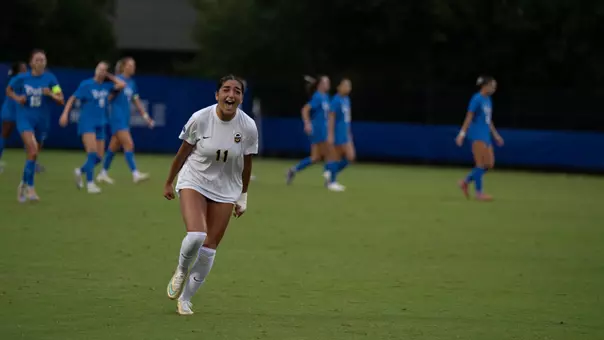
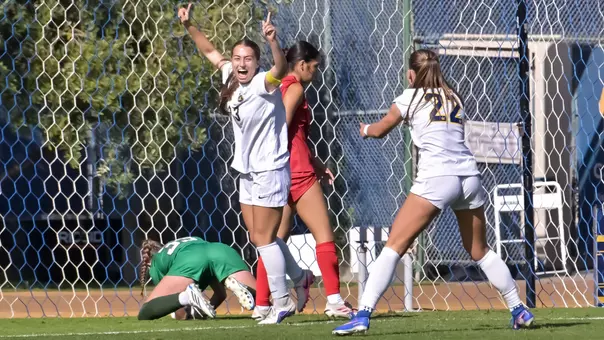
Coco Thistle has persevered through two full seasons of soccer despite ongoing medical issues.
Photo by: Al Sermeno/KLC fotos
Running On Resilience
10/2/2024 11:00 AM | Women's Soccer, Inside The Lair
Cal’s Coco Thistle Overcomes Unsettling Cancer Scare To Return To Bears
This feature originally appeared in the 2024 Fall edition of the Cal Sports Quarterly. The Cal Athletics flagship magazine features long-form sports journalism at its finest and provides in-depth coverage of the scholar-athlete experience in Berkeley. Printed copies are mailed four times a year to Bear Backers who give annually at the Bear Club level (currently $600 or more). For more information on how you can receive a printed version of the Cal Sports Quarterly at home, send an email to CalAthleticsFund@berkeley.edu or call (510) 642-2427.
"You have a large mass in your upper left lung and your upper left lobe has collapsed."
Those are the words that Coco Thistle of the California women's soccer team heard over the phone from her latest physician as she was driving back up to Berkeley from her hometown of Encinitas last March. Her post-spring break commute was interrupted, not by her first doctor, or her second, but her sixth. While he was unlucky in having to deliver the results of the CT scan and Thistle unlucky to receive it, especially while motoring up I-5, the discovery ended a nearly four-year long mystery.
And that is exactly what he and his colleagues chalked it up to – bad luck.
"They don't know the cause, they told me it was just bad luck," Thistle said with a laugh. "So, I was just like, 'um wow, okay for sure.' My friend was in the car with me and we both just kind of looked at each other. I missed our exit."
Thistle first noticed symptoms in late 2020, two years before beginning her collegiate career as a midfielder for the University of Colorado. It all began with chronic wheezing and coughing.
"The most popular diagnosis I got was allergies," Thistle said. "I was prescribed allergy medication and three inhalers but they didn't really help. It was on and off - it didn't really feel like it affected my play."
The symptoms took a turn for the worse in 2022 when Thistle arrived in Boulder for her freshman season with the Buffaloes. Not only did she make the jump from high school to Division I soccer, but also from an elevation of 82 feet to 5,430 feet. The wheezing, coughing, and discomfort sent her to the emergency room on multiple occasions after causing a bronchitis infection.
"We heard several diagnoses - allergies, a virus, an infection," Thistle's father, Bryan Thistle said. "Then she transferred to Cal and the symptoms continued. The barking cough, wheezing, she couldn't lay on her left side - so when she came home for spring break, we were determined to figure this out."
Doctor number six's initial thought was allergies but decided to send Thistle in for an X-ray anyway. What was discovered was deemed abnormal, and she was called back in to get the CT scan.
"It was definitely a weird call," Thistle said. "I had gotten an X-ray two years prior and it was normal, so we always thought like there was nothing actually wrong with my lung. But he also was very reassuring saying there was no need to panic. Then the call ended with me and my friend started kind of laughing, we just started laughing because like you can't really process it right."
Thistle had to return home for a bronchoscopy. The biopsy got back and finally revealed the condition – it was a carcinoid tumor, a slow spreading cancer.
Thistle's doctors believe she has been playing with these conditions for over two years. In those two years she appeared in 27 matches, made 12 starts, logged 837 minutes and scored a game-winning goal against Oregon State in the Golden Bears' 2023 home finale.
The only way to remove the mass was through surgery. She had a lobectomy in May. The mass and lobe were both removed, and the medical staff is hopeful she won't have any lasting effects that will prohibit her from playing soccer.
"The way I process things is very light-hearted and I don't really try to dwell on it; I guess because there's nothing I can do about it," Thistle said. "Even though I'm not on the field yet, I think it's just important to keep positivity in your life and people around you just to help you through hard times."
Throughout the whole process, Thistle kept a steady, optimistic mindset, even in times of great uncertainty. Thistle had lost full lung capacity, which could drive many to medically retire despite physicians saying there were no risks in returning to the sport. According to her father, this life event has even pushed her further toward her goal of playing professional soccer.
"Instead of knocking her back and making her question her choices, Coco has embraced them even more," Bryan
Thistle said. "She's run toward that because that's what's important to her. So I think it's changed all of us, but in a strange way, it's kind of helped her confirm her focus and made her work even harder."
Her former club head coach, Josh Henderson of San Diego Surf SC, had a similar sentiment about Thistle's tenacity and perseverance.
"Coco carries joy and confidence when she is playing soccer," Henderson said. "Always has a smile on her face and is constantly working to be her best self. She has struggled through the years with countless setbacks from injuries to health scares. Not many, if any at all, would have overcome half of these trials much less all of them in a four-year period. This speaks to the person she is and her love for the sport."
Thistle's style of play directly correlates with her personality. She hustles, makes the right plays, and sets others up for success for the good of the team. She has never been flashy, and thus this story, while still very new, hasn't been the focus of her narrative. It hasn't even been mentioned on her social media pages despite her Instagram grossing over 26,000 followers that tune in to see new soccer tips, drills, and technical work. It was the knowledge that her experience would undoubtedly be helpful to others that drove her willingness to share.
"This isn't something I want to be known for; I never ask for sympathy," Thistle said. "But I know this story can be inspirational for others. It can help people and there's something to be said about that. It's also about self-advocacy. I knew something was wrong with my body, but few believed me and that was a struggle for me."
"You have a large mass in your upper left lung and your upper left lobe has collapsed."
Those are the words that Coco Thistle of the California women's soccer team heard over the phone from her latest physician as she was driving back up to Berkeley from her hometown of Encinitas last March. Her post-spring break commute was interrupted, not by her first doctor, or her second, but her sixth. While he was unlucky in having to deliver the results of the CT scan and Thistle unlucky to receive it, especially while motoring up I-5, the discovery ended a nearly four-year long mystery.
And that is exactly what he and his colleagues chalked it up to – bad luck.
"They don't know the cause, they told me it was just bad luck," Thistle said with a laugh. "So, I was just like, 'um wow, okay for sure.' My friend was in the car with me and we both just kind of looked at each other. I missed our exit."
Thistle first noticed symptoms in late 2020, two years before beginning her collegiate career as a midfielder for the University of Colorado. It all began with chronic wheezing and coughing.
"The most popular diagnosis I got was allergies," Thistle said. "I was prescribed allergy medication and three inhalers but they didn't really help. It was on and off - it didn't really feel like it affected my play."
The symptoms took a turn for the worse in 2022 when Thistle arrived in Boulder for her freshman season with the Buffaloes. Not only did she make the jump from high school to Division I soccer, but also from an elevation of 82 feet to 5,430 feet. The wheezing, coughing, and discomfort sent her to the emergency room on multiple occasions after causing a bronchitis infection.
"We heard several diagnoses - allergies, a virus, an infection," Thistle's father, Bryan Thistle said. "Then she transferred to Cal and the symptoms continued. The barking cough, wheezing, she couldn't lay on her left side - so when she came home for spring break, we were determined to figure this out."
Doctor number six's initial thought was allergies but decided to send Thistle in for an X-ray anyway. What was discovered was deemed abnormal, and she was called back in to get the CT scan.
"It was definitely a weird call," Thistle said. "I had gotten an X-ray two years prior and it was normal, so we always thought like there was nothing actually wrong with my lung. But he also was very reassuring saying there was no need to panic. Then the call ended with me and my friend started kind of laughing, we just started laughing because like you can't really process it right."
Thistle had to return home for a bronchoscopy. The biopsy got back and finally revealed the condition – it was a carcinoid tumor, a slow spreading cancer.
Thistle's doctors believe she has been playing with these conditions for over two years. In those two years she appeared in 27 matches, made 12 starts, logged 837 minutes and scored a game-winning goal against Oregon State in the Golden Bears' 2023 home finale.
The only way to remove the mass was through surgery. She had a lobectomy in May. The mass and lobe were both removed, and the medical staff is hopeful she won't have any lasting effects that will prohibit her from playing soccer.
"The way I process things is very light-hearted and I don't really try to dwell on it; I guess because there's nothing I can do about it," Thistle said. "Even though I'm not on the field yet, I think it's just important to keep positivity in your life and people around you just to help you through hard times."
Throughout the whole process, Thistle kept a steady, optimistic mindset, even in times of great uncertainty. Thistle had lost full lung capacity, which could drive many to medically retire despite physicians saying there were no risks in returning to the sport. According to her father, this life event has even pushed her further toward her goal of playing professional soccer.
"Instead of knocking her back and making her question her choices, Coco has embraced them even more," Bryan
Thistle said. "She's run toward that because that's what's important to her. So I think it's changed all of us, but in a strange way, it's kind of helped her confirm her focus and made her work even harder."
Her former club head coach, Josh Henderson of San Diego Surf SC, had a similar sentiment about Thistle's tenacity and perseverance.
"Coco carries joy and confidence when she is playing soccer," Henderson said. "Always has a smile on her face and is constantly working to be her best self. She has struggled through the years with countless setbacks from injuries to health scares. Not many, if any at all, would have overcome half of these trials much less all of them in a four-year period. This speaks to the person she is and her love for the sport."
Thistle's style of play directly correlates with her personality. She hustles, makes the right plays, and sets others up for success for the good of the team. She has never been flashy, and thus this story, while still very new, hasn't been the focus of her narrative. It hasn't even been mentioned on her social media pages despite her Instagram grossing over 26,000 followers that tune in to see new soccer tips, drills, and technical work. It was the knowledge that her experience would undoubtedly be helpful to others that drove her willingness to share.
"This isn't something I want to be known for; I never ask for sympathy," Thistle said. "But I know this story can be inspirational for others. It can help people and there's something to be said about that. It's also about self-advocacy. I knew something was wrong with my body, but few believed me and that was a struggle for me."


Players Mentioned

MF
/ Women's SoccerWednesday, November 13
Sunday, November 03
Thursday, October 31
Monday, October 21