California Golden Bears Athletics
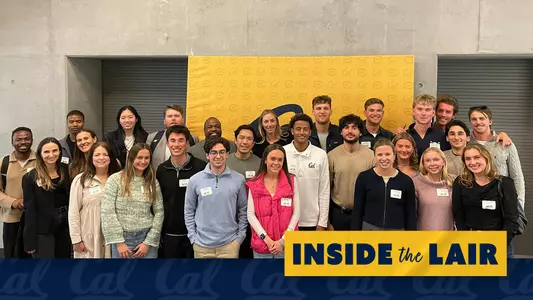
Photo by: Cal Athletics
What Comes Next
10/21/2025 11:30 AM | Cameron Institute
Cameron Institute’s Career Pillar Helps Prepare Student-Athletes For Life After Athletics
This feature originally appeared in the 2025 Fall edition of the Cal Sports Quarterly. The Cal Athletics flagship magazine features long-form sports journalism at its finest and provides in-depth coverage of the scholar-athlete experience in Berkeley. Printed copies are mailed four times a year to Bear Backers who give annually at the Bear Club level (currently $600 or more). For more information on how you can receive a printed version of the Cal Sports Quarterly at home, send an email to CalAthleticsFund@berkeley.edu or call (510) 642-2427.
"Who am I?"
That question plagues college students the world over, particularly juniors and seniors who see the daunting prospect of finding a career looming ahead.
If those students are also athletes – who have dedicated practically their entire lives to a pursuit that, for a vast majority of them, is coming to an end – the uncertainty is even stronger.
Since its inception in 2019, Cal Athletics' Cameron Institute has sought to aid student-athletes in finding answers to that question of self-identity, using an innovative three-pillar model (known as The California Way) of Career Development, Community Engagement and Mental Performance to help them plan out the next steps of their lives and give them the tools to execute said plan.
Put simply, says Senior Associate Athletics Director and Cameron Institute Director Dr. Marissa Nichols, the mission of the Cameron Institute is to help student-athletes "imagine what's possible for their lives in addition to sport."
The first of these pillars, through the efforts of Career Development Director Dr. Bineti Vitta and Career Development Advisors Ryan Rodriguez and James Van, seeks to prepare student-athletes to enter the professional job circuit.
Rodriguez, a former college football player and coach, noticed that a disproportionate amount of the athletes that he spoke with had plans to become coaches themselves because they felt that path was their only option – that there was nothing else out there for them. "How can I help them prepare for that transition out of college and know both who they are and what they can do?" he remembers thinking.
Van, a former amateur competitive cycler, had likewise experienced all the challenges associated with attempting to balance a disciplined training routine with academics and preparing to enter the career field.
"Everyone defines success differently, but it's important to have a success plan," Van said. "How can (student-athletes) gain experience and build their skillsets when a traditional career path doesn't fit their schedule?"
A huge challenge that many student-athletes have, Rodriguez and Van believe, is finding direction. "People don't know what they want to do and don't know how to navigate that" Van said. "I think there's a process in which we can help them discover what they're interested in and how they can tie that into their careers."
The process – involving one-on-one advisor-student meetings, a career readiness seminar offered exclusively to student-athletes, a job shadow program and a mentor program – has made a tremendous impact on several athletes such as All-American Alexandria Young-Gomez (beach volleyball, 2022-25) and World U23 Champion Iliad Izadi (rowing, 2021-25). Both Izadi and Young took notice of the consistent efforts that the Cameron Institute made to reach out to Cal's student-athlete base – "demonstrating their care," as Young-Gomez puts it.
Before getting involved with the Cameron Institute as a sophomore, Young-Gomez had plenty of big ideas but didn't know how to channel them into a future career. Now, she credits Rodriguez and the Cameron Institute with helping her build a strategy, connecting her with a mentor and aiding her in landing her current job at AlphaSights, an expert network company.
Even after graduation, Young-Gomez enjoys support from the relationships that she's built through the Career Development pillar.
"I still keep in touch with my mentor," she said, "and Ryan always follows up – he's always checking in on how I'm feeling or what I'm doing."
Izadi had seen Rodriguez many times at his team's practices and decided to attend a networking seminar that he hosted. Although he had studied engineering throughout his career at Cal, he slowly came to realize that the standard engineering path might not be his true calling.
"I liked a lot of the work, but I wanted to explore different options," he said. "I didn't have a good sense of where I wanted to go (after graduation)."
After attending Rodriguez's networking session, Izadi decided that the Cameron Institute was too good of a resource to pass up – and considers himself well-rewarded for his involvement.
"Ryan does an excellent job at pairing you up with someone who's in an industry you're interested in," Izadi said. "James' experience with career readiness really shows when you first meet with him. Working with him is great when you're preparing applications and going through the process."
Today's job market is shifting at an unprecedented rate, aided by the increased use of artificial intelligence, or AI, within both the hiring process and the job's day-to-day duties themselves. How, then, can the Cameron Institute prepare student-athletes for the challenge of keeping pace?
"We're leaning more into developing relationships with alumni and employers," Rodriguez said. "They're being inundated with applications and are looking for ways to be connected to high-caliber individuals. We don't know how AI is going to change the market, but we can focus on building certain core skillsets that are going to be in demand, such as the ability to be a critical thinker and problem-solver."
For his part, Van maintains an adaptive mindset and continues to ask hiring managers about the qualities that they look for in applicants and how they would prepare candidates for the career world.
"They increasingly seek reliance on the intangibles, those soft skills that our athletes have done well in – leadership, collaboration, conflict resolution, working under pressure," he said. "Knowing that helps us help our student-athletes position themselves better to grow those skills and learn how to articulate them to potential employers."
Moving forward, the Cameron Institute is working to offer further customization to each involved student-athlete through a new program called "Career Tracks," partnering with the Big C Society – Cal's letterwinner society - to increase its network of professionals and the resources that it can offer to its base.
"We're going to curate these opportunities for you," Rodriguez said. "You've just got to say yes."
If you would like to support Cal student-athletes with career development through mentorship or work experiences like a job shadow, project work, internship or job, go to calbears.com/cameroninstitute and sign up through the "Get Involved" form or join The Golden Bear Network.
"Who am I?"
That question plagues college students the world over, particularly juniors and seniors who see the daunting prospect of finding a career looming ahead.
If those students are also athletes – who have dedicated practically their entire lives to a pursuit that, for a vast majority of them, is coming to an end – the uncertainty is even stronger.
Since its inception in 2019, Cal Athletics' Cameron Institute has sought to aid student-athletes in finding answers to that question of self-identity, using an innovative three-pillar model (known as The California Way) of Career Development, Community Engagement and Mental Performance to help them plan out the next steps of their lives and give them the tools to execute said plan.
Put simply, says Senior Associate Athletics Director and Cameron Institute Director Dr. Marissa Nichols, the mission of the Cameron Institute is to help student-athletes "imagine what's possible for their lives in addition to sport."
The first of these pillars, through the efforts of Career Development Director Dr. Bineti Vitta and Career Development Advisors Ryan Rodriguez and James Van, seeks to prepare student-athletes to enter the professional job circuit.
Rodriguez, a former college football player and coach, noticed that a disproportionate amount of the athletes that he spoke with had plans to become coaches themselves because they felt that path was their only option – that there was nothing else out there for them. "How can I help them prepare for that transition out of college and know both who they are and what they can do?" he remembers thinking.
Van, a former amateur competitive cycler, had likewise experienced all the challenges associated with attempting to balance a disciplined training routine with academics and preparing to enter the career field.
"Everyone defines success differently, but it's important to have a success plan," Van said. "How can (student-athletes) gain experience and build their skillsets when a traditional career path doesn't fit their schedule?"
A huge challenge that many student-athletes have, Rodriguez and Van believe, is finding direction. "People don't know what they want to do and don't know how to navigate that" Van said. "I think there's a process in which we can help them discover what they're interested in and how they can tie that into their careers."
The process – involving one-on-one advisor-student meetings, a career readiness seminar offered exclusively to student-athletes, a job shadow program and a mentor program – has made a tremendous impact on several athletes such as All-American Alexandria Young-Gomez (beach volleyball, 2022-25) and World U23 Champion Iliad Izadi (rowing, 2021-25). Both Izadi and Young took notice of the consistent efforts that the Cameron Institute made to reach out to Cal's student-athlete base – "demonstrating their care," as Young-Gomez puts it.
Before getting involved with the Cameron Institute as a sophomore, Young-Gomez had plenty of big ideas but didn't know how to channel them into a future career. Now, she credits Rodriguez and the Cameron Institute with helping her build a strategy, connecting her with a mentor and aiding her in landing her current job at AlphaSights, an expert network company.
Even after graduation, Young-Gomez enjoys support from the relationships that she's built through the Career Development pillar.
"I still keep in touch with my mentor," she said, "and Ryan always follows up – he's always checking in on how I'm feeling or what I'm doing."
Izadi had seen Rodriguez many times at his team's practices and decided to attend a networking seminar that he hosted. Although he had studied engineering throughout his career at Cal, he slowly came to realize that the standard engineering path might not be his true calling.
"I liked a lot of the work, but I wanted to explore different options," he said. "I didn't have a good sense of where I wanted to go (after graduation)."
After attending Rodriguez's networking session, Izadi decided that the Cameron Institute was too good of a resource to pass up – and considers himself well-rewarded for his involvement.
"Ryan does an excellent job at pairing you up with someone who's in an industry you're interested in," Izadi said. "James' experience with career readiness really shows when you first meet with him. Working with him is great when you're preparing applications and going through the process."
Today's job market is shifting at an unprecedented rate, aided by the increased use of artificial intelligence, or AI, within both the hiring process and the job's day-to-day duties themselves. How, then, can the Cameron Institute prepare student-athletes for the challenge of keeping pace?
"We're leaning more into developing relationships with alumni and employers," Rodriguez said. "They're being inundated with applications and are looking for ways to be connected to high-caliber individuals. We don't know how AI is going to change the market, but we can focus on building certain core skillsets that are going to be in demand, such as the ability to be a critical thinker and problem-solver."
For his part, Van maintains an adaptive mindset and continues to ask hiring managers about the qualities that they look for in applicants and how they would prepare candidates for the career world.
"They increasingly seek reliance on the intangibles, those soft skills that our athletes have done well in – leadership, collaboration, conflict resolution, working under pressure," he said. "Knowing that helps us help our student-athletes position themselves better to grow those skills and learn how to articulate them to potential employers."
Moving forward, the Cameron Institute is working to offer further customization to each involved student-athlete through a new program called "Career Tracks," partnering with the Big C Society – Cal's letterwinner society - to increase its network of professionals and the resources that it can offer to its base.
"We're going to curate these opportunities for you," Rodriguez said. "You've just got to say yes."
If you would like to support Cal student-athletes with career development through mentorship or work experiences like a job shadow, project work, internship or job, go to calbears.com/cameroninstitute and sign up through the "Get Involved" form or join The Golden Bear Network.

Wednesday, February 10
Wednesday, February 10
Monday, August 31
Monday, August 31